
Buildings rarely behave as a collection of isolated components. Their construction, materials, exposure, alterations and patterns of use all influence how moisture enters, moves through and leaves the building fabric.
At Tree Cassyn, we begin by understanding those relationships. We examine the building as a whole, consider its history and the circumstances surrounding the reported problem, then test possible explanations against the evidence available.
Our aim is to establish not only what is happening, but why. We distinguish observations from interpretation, recognise where uncertainty remains and recommend action that is proportionate to the findings.
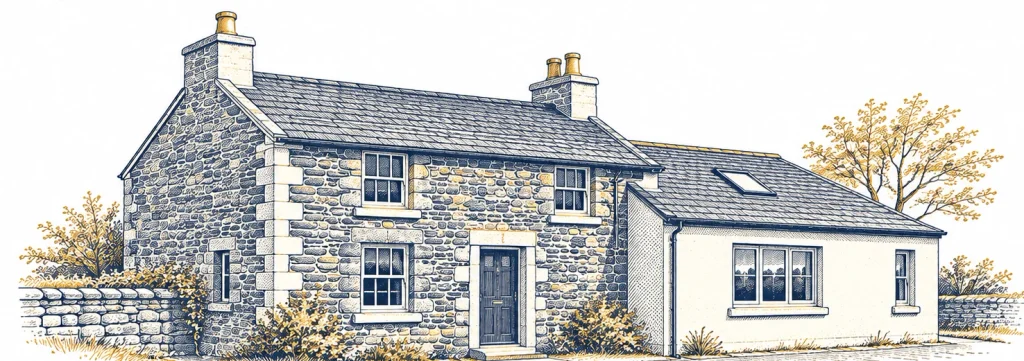
Where old and new construction meet, differences in materials and detailing can influence how moisture enters, moves and dries. Understanding these relationships is part of the whole-building approach advocated by the 2022 Joint Position Statement.
Understanding the context
The significance of a defect depends on the building in which it occurs. Construction, exposure, alterations and maintenance all provide context that helps us distinguish symptoms from their possible causes.
Evidence before assumptions
Measurements and observations help us evaluate possible explanations, but no single reading should determine a diagnosis. Where the evidence is inconclusive, we explain what remains uncertain rather than present assumptions as established facts.
Recommendations that make sense
Our advice reflects the evidence and the significance of the findings. We distinguish necessary repairs from routine maintenance, monitoring and matters requiring further investigation, helping clients understand what needs attention and why.
Explore the building science
For readers interested in understanding these principles in greater depth, our Building Science Guides explore how buildings manage moisture, why problems develop and how construction materials, alterations and maintenance can influence their performance.